
Why 2026 is the year everything changed
In just five months, three bullets hit the manga and manhwa industry in the same spot. On 31 October 2025, Shueisha issued a formal statement urging the Japanese government to enact strict legislation against generative AI after the flood of Sora 2 videos copying its characters. Weeks later, the CODA association — whose members include Studio Ghibli, Square Enix, KADOKAWA, and Bandai Namco — signed a collective letter to OpenAI demanding it stop. Then in May 2026, Sony announced that Crunchyroll had crossed 21 million paid subscribers.
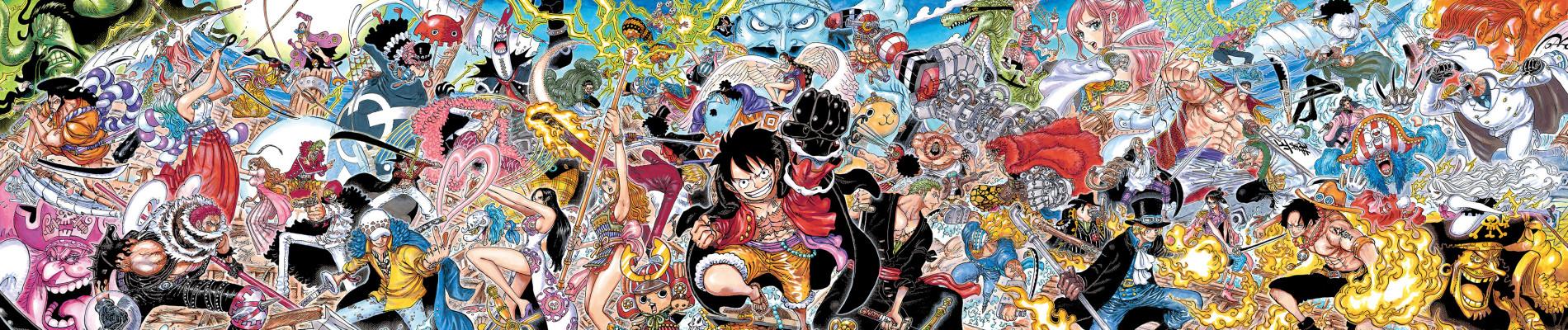
What ties these blows together is not "AI versus the artist" in the reductive Twitter framing. The real story is a map of power: a publisher investing in the tool, a platform translating with it, a machine translator swallowing pages by the thousand, and a reader — you — paying the subscription at the end. This article puts every piece in its place and answers a long-overdue question: where do Arab readers stand in all of this?
The Japanese battle line: Shueisha, CODA, and Article 30-4
The October 2025 statement and CODA's letter to OpenAI
Shueisha's 31 October 2025 statement was not an emotional cry. It was a sharply worded legal document calling on the Japanese government to move past the opt-out model OpenAI uses and shift to a real opt-in regime that requires prior consent from rights holders. The trigger was Sora 2 and its flood of videos imitating One Piece and other characters with unsettling accuracy.
About a week later came the collective response. In November 2025, CODA — Studio Ghibli, Bandai Namco, Aniplex, Square Enix, KADOKAWA, and Shueisha — sent a formal letter to OpenAI demanding it stop using their content to train Sora 2. CODA's argument is purely legal: Japanese copyright law requires prior consent and does not recognize "subsequent withdrawal" as a legitimate mechanism.
What does Article 30-4 actually say?
Article 30-4 of Japan's Copyright Act has been in force since 1 January 2019. It permits the use of copyrighted works to train AI as long as the use is "non-enjoyment-oriented" — purely technical. That clause made Japan an attractive destination for AI companies for years.
But in February 2024, after 25,000 public comments, Japan's Agency for Cultural Affairs issued revised guidance narrowing the interpretation: using pirated data, or generating content that imitates a specific artist's style, falls outside the exception. Here is the paradox: Shueisha cites that guidance to push for restrictions on OpenAI from the outside, while investing in the same kind of memory from the inside through Comic Copilot and DEAIBOOKS.
Machine translation engines: Mantra, Orange, and who reaches Arabic first?
Mantra Engine: 100,000 pages a month
Mantra is not an experiment. The company raised about 780 million yen (about 4.9 million dollars) through share allocations to Shueisha, Shogakukan, KADOKAWA, and Square Enix Holdings — not a casual list, but four of Japan's largest publishers at one table. Its Mantra Engine translates up to 100,000 manga pages a month (roughly 500 volumes) into English, Chinese, Korean, Vietnamese, and Portuguese.
The first high-profile case of AI simulpub came on 21 December 2023, when The Ancient Magus' Bride returned from hiatus on Bushiroad Works' Comic Growl with a same-day English release translated by Mantra and edited by humans. The model was not "AI-only"; it was AI followed by a person — and that combination is the industry standard today.

Orange Inc.: 19.5 million dollars to translate 50,000 titles
On 6 May 2024, the Japanese startup Orange Inc. raised 2.92 billion yen (19.5 million dollars) in a Pre-Series A round led by Shogakukan. The stated goal: translate 500 works a month, reaching 50,000 titles in five years.
Then came the practical rollout. On 23 January 2025, Shogakukan launched the NOVELOUS app for light novels and manga in the United States and Canada, powered by Mantra's smart translation, with 80-plus works at launch and a target of 400 titles within two years and one million users by 2027.
Where is Arabic in all this? Nowhere. But on 12 April 2024, Shueisha ran a one-month MANGA Plus Universe pilot — a global community around 15 series, with reader comments auto-translated into 9 languages (English, French, Indonesian, Japanese, Portuguese, Russian, Thai, Vietnamese, and Spanish). No Arabic. The signal is clear: the Arabic-speaking market is not in the first wave, but it is not far from the second.
Crunchyroll and the "ChatGPT said" scandal: what subcontracting reveals
In July 2025, a third-party vendor for Crunchyroll leaked raw ChatGPT translations in the German version of Necronomico and the Cosmic Horror Show. The actual text literally began with the phrase "ChatGPT said." The scandal exploded in hours, forcing the company to issue a formal statement declaring that AI was prohibited in creative translation and that the vendor had violated policy.
The commercial context makes the story heavier. Crunchyroll jumped from 17 million subscribers in March 2025 to 21 million in May 2026 — a figure worth reading alongside Crunchyroll's growth to 21 million subscribers masks its structural problems. The growth is real, but the product quality rests on a fragile translation supply chain — subcontracted vendors who may turn to a large language model when the deadline closes.
Production tools: Naver AI Painter, Project Tezuka 2020, and the "AI touch" in manhwa
The Koreans beat the Japanese at embedding AI inside production tools. On 27 October 2021, Naver Webtoon launched AI Painter for automatic coloring after three years of research and more than 300,000 images from Naver's database, alongside Webtoon AI Editor, which extracts characters and mimics artist styles.
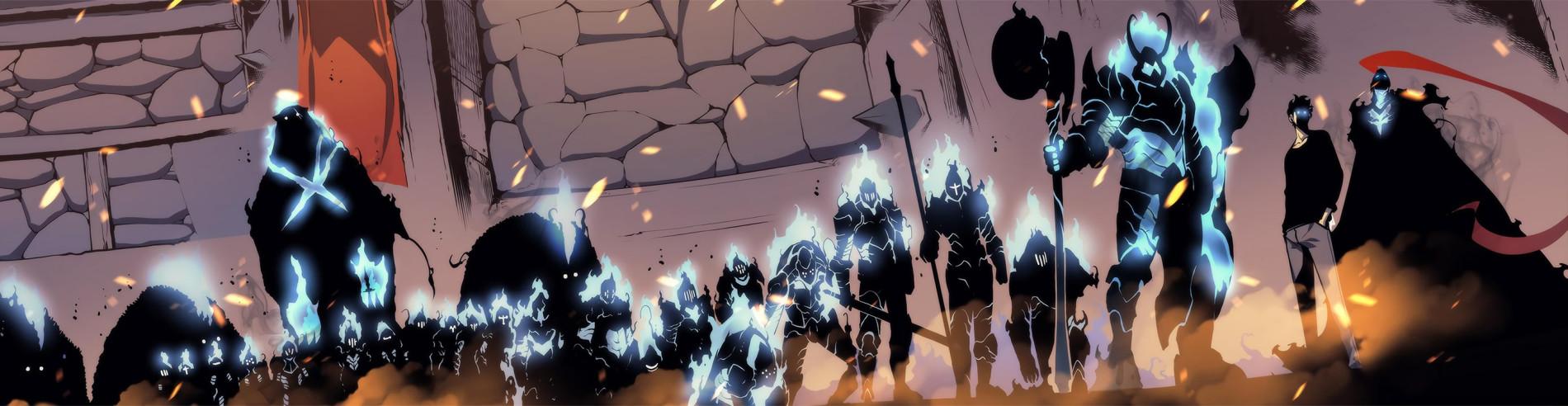
Then the anger detonated. In May 2023, more than 200 Korean artists boycotted Naver Webtoon's amateur section to protest a contract clause that allowed the platform to use their work to train AI. The trigger was The Knight King Returned with the Gods, a manhwa by Blue Line studio, which tanked to a 1.98/5 rating because of visible AI touches that readers spotted immediately.
Economically, Naver does not seem bothered. On 27 June 2024, Webtoon Entertainment (its American arm) went public on Nasdaq with a 315 million dollar IPO and announced that proceeds would fund AI expansion and creator tools — while Naver retained 63.3% of voting rights.
The Japanese chose the artistic route. The TEZUKA2020 project (Tezuka Productions, Kioxia, and Keio University researchers) used NVIDIA's StyleGAN to generate characters in Osamu Tezuka's style, based on 10,000 face images from Astro Boy, Black Jack, and Phoenix. The resulting work, "Paidon," was published in Kodansha's Morning magazine. This was not a lab demo; it was published in a major weekly.
What this means for Arab readers
Arabic is not on the Mantra or Orange map today. But the MANGA Plus Universe precedent from 2024 — auto-translation into nine languages in a single rollout — makes Arabic support a question of when, not whether. And it will most likely arrive through reader comments and metadata before it arrives through the manga pages themselves.

On 25 April 2024, Shueisha launched DEAIBOOKS — an AI-powered virtual bookstore hosted by the character Aihara Pitari (designed by Mengo Yokoyari, the artist of Oshi no Ko) to recommend manga from a catalog of more than 5,000 titles based on reader taste. This is the model likely to reach Arabic before full translation does: smart recommendation built on licensed databases.
Conclusion — the finish line has not been drawn yet
In 2026, three fronts are active at once: a legal one between CODA and OpenAI, a translation one between Mantra and Orange and human translators, and a production one between Naver and Tezuka and the artists. What decides the outcome is not the technology, but who pays the subscription — and the Arab subscriber is a voice that has not yet been counted in this equation.
We will track every official development here in the latest manga and manhwa industry news. AI has entered the room; who decides what it does inside that room is a question still open.