Murim: the genre breaking through, and why now
Before we pick the ten, agree on what we're reading. Murim (무림 / Murim) is a Korean term meaning literally "the martial forest" — a hidden world of sects and clans practicing internal martial arts, ki and qi, apart from ordinary society and fighting each other politically and bloodily across generations (source). This isn't background flavor. It's a full set of game rules with its own history and vocabulary.
Murim vs Wuxia vs Xianxia: the differences that matter to a reader
The genre branches from the Chinese Wuxia tradition but writes with a different pen. Wuxia cares about chivalry and the individual nobility of a wandering warrior. Xianxia pushes its protagonist toward a ceilingless divine ascension. Murim, by contrast, places heavy political weight on sects, council elders, and collective vendetta — and keeps its combat ceiling human or near-superhuman. The hero doesn't become a god. He becomes the strongest human in "the forest."
Why 2026 is Murim's moment
Because its apex just detonated. Return of the Mount Hua Sect returned with its third season on April 14, 2026 after a hiatus of more than a year, and Studio LICO launched it in seven simultaneous languages this time instead of the three-week gap non-Korean readers had grown used to — on top of 2.1 billion cumulative views and 3.9 million subscribers on Webtoon. That number isn't a detail; it's a cultural event. The article in front of you ranks the 10 strongest titles worth reading right now, with transparent criteria and a starting recommendation for the new reader. For a wider view of the manhwa map in 2026, our report on the most famous manhwa of 2026 places Murim in its broader generic context.
The two genre-defining giants: Return of the Mount Hua Sect and Legend of the Northern Blade
These aren't just the "top two." These are the two titles whose removal from modern Murim history would change the shape of the entire genre over a full decade.
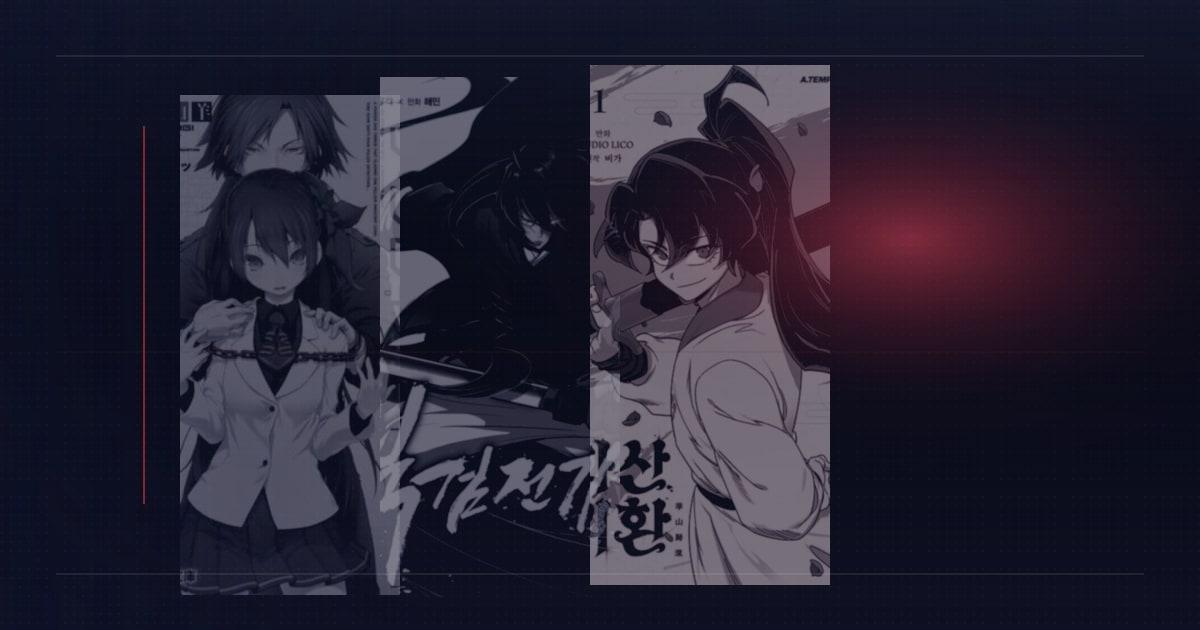
1. Return of the Mount Hua Sect (화산귀환) — the undisputed peak of 2026. The source novel by Biga has been running on Naver Series since April 25, 2019. The webtoon, produced by Studio LICO, launched on March 23, 2021, closed its first season on August 16, 2022, and opened its second on June 23, 2023. The premise in two lines: a legendary warrior of the Mount Hua sect returns to life decades after his sect collapsed in his absence and rebuilds it on accumulated knowledge rather than raw force. This is a regression built on wisdom, not on OP-stat grinding.

Why first place? Because the work has proven itself three times over: it won the Presidential Award in the cartoon category at the 2022 Korea Contents Awards, returned with a third season on April 14, 2026 launched simultaneously in seven languages, and the return came alongside a new animated teaser from Studio LICO hinting at a future visual adaptation — without a confirmed production studio or air date as of May 2026. Chapter 163 dropped on May 20, 2026, so the pulse is alive.
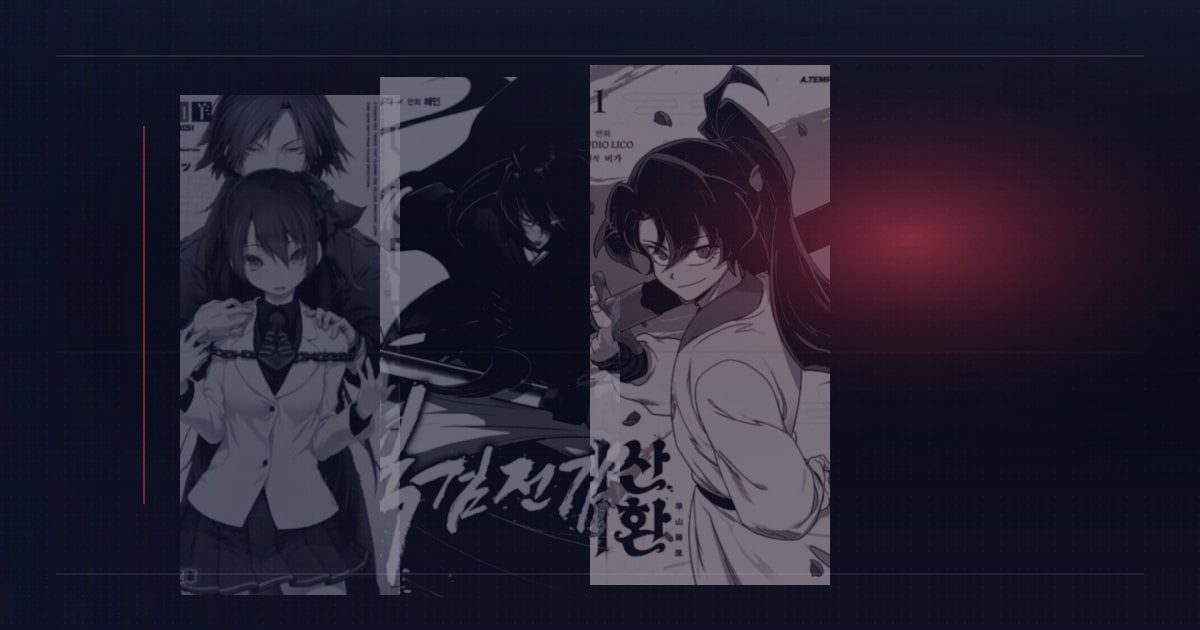
2. Legend of the Northern Blade (북검귀) — sect-bound revenge in its purest form. The source novel by Woo-Gak is complete on Kakao Page; the webtoon, illustrated by Hae-Min, launched on December 31, 2019 and is still running, with an ongoing official translation on Tappytoon. The story: the son of the Northern Blade sect hunts the clan that wiped out his family on a strict revenge arc, with no comedic relief and no friendly side-quests. A vertical narrative as sharp as the blade itself.

Honest caveats before you pick. A reader looking to Mount Hua for the warmth of a "reclaimed family" and a heartfelt student spirit may find Northern Blade cold and dark to the point of exhaustion after twenty consecutive chapters. The reverse is also true: a reader chasing breathless speed may find Mount Hua slow in its opening chapters before the cast finally assembles. This isn't a contest between two peaks; it's two different answers to the question of what "being the strongest" actually means.
The canonical classics: Volcanic Age and The Breaker
Everything you read in 2026 Murim has parents. These two are the most influential.
3. Volcanic Age — the regression that paved the road for Mount Hua. The source novel by Jeong Jun is complete at 17 volumes (429 chapters plus 4 extras) and also revolves around the Mount Hua sect, but with an older, politically colder treatment. If you read Mount Hua, loved the concept, and asked yourself "where did this structure come from in the first place?" — the answer is here. Same time-loop premise built on accumulated knowledge, but with less sentimentality and more rigor in showing how sects punish anyone who stumbles.

Volcanic Age caveats: the pacing is much slower, and a reader used to the 2024–2026 sprint rhythm may bounce off it. But the second-half payoff is enormous, and after it you'll understand exactly why genre critics treat it with such reverence.
4. The Breaker (original) — the root of modern Murim, in a complete three-part arc. Written by Jeon Geuk-jin and drawn by Park Jin-hwan (under the pen name Kamaro), the original ran in Daiwon C.I.'s Young Champ magazine from 2007 to 2010, followed by The Breaker: New Waves on Daum from 2010 to 2015, then The Breaker: Eternal Force as a webtoon since 2022. Three consecutive works, not three separate ones, telling a single protagonist's arc.

Why it's non-negotiable? Because it is, quite simply, the work that invented the "secret master and weak student" formula that dozens of later manhwa inherited. Caveats: parts one and two ended more than a decade ago and are drawn in traditional black-and-white panels — a reader expecting a vertical, color-graded webtoon canvas will need two chapters to adjust to the older aesthetic. Practice patience; this is history.
The new wave: regression and system inside a Murim frame
After 2020, Murim entered a hybrid workshop. Two titles did it the smartest way.
5. Nano Machine — Murim meets science fiction. Written by Han Joong Wueol Ya, illustrated by GGBG with adaptation by Great H, it has been published weekly on Naver/Webtoon since June 10, 2020. The story in two lines: a hero from the future receives a nano-injection that rewrites his body, then enters the Murim world as the weakest heir of the Goblin sect and climbs the power hierarchy via a mechanism explainable in physics, not in metaphysics.

The fusion here is genuine, not decorative: nano-tech explains the combat leaps instead of "I am the chosen one," and that's exactly what lands with the post-Solo Leveling reader — a reader who wants to understand why the hero ascends, not merely accept that he does. A 2026 encyclopedic survey of the genre lists it among the standout attempts at fusing Murim with science fiction (NovelNodes).
6. Murim Login — LitRPG inside the sect world. Written by Zerobic, illustrated by Jang Cheol-Byuk and published by Kenaz, it launched in 2020 and is still running, with 206 translated chapters while the source novel has already crossed 1,000. The idea: a hero in our modern world enters a Murim "game" through a daily punishment system, gaining real-world power in exchange for surviving in the sect world.

This work takes the standard system template common to modern regression manhwa and plants it inside Murim instead of a dungeon or a tower, creating a dynamic the genre hadn't seen before. Caveats: readers who hate system prompts and notification windows inside panels will find Murim Login grating from chapter one; readers who prefer their Murim "pure" may find Nano Machine an intrusion by the nano element. Know your taste before you start.
The returnees and avengers: Chronicles of the Demon Faction and Heavenly Demon Cultivation Simulation
What if the hero wasn't from the virtuous sect? What if he was the demon himself?
7. Chronicles of the Demon Faction (마도전생기) — the demon clan lord returns. Written by codezero and illustrated by Molli, published under WEBTOON Originals. The source novel is massive: 1,125 chapters split between a completed main story of 650 chapters and an ongoing side story of 475 chapters. Summary: the leader of the demon clan is reborn decades before his fall and uses his knowledge of the future to rebuild his clan from zero. A regression — but from the "wrong" side.

Its value: it flips the moral compass of the entire genre. The hero isn't a hero — he's the demon himself. That gives the fights a different political weight than the noble Mount Hua sects allow, and it gives the author room to escalate a level of violence a traditional protagonist could never carry. Caveats: the violence here is well above the genre average and the narrative doesn't soften it. If methodical on-page killing turns you away, walk by.
8. Heavenly Demon Cultivation Simulation — die a thousand times to become the strongest. Written by Cho Hyeong-geun (조형근) and published on Naver since 2021, with 175+ webtoon chapters by 2026 and 166 translated into English according to MangaNato. The original idea: an ordinary young man gains the ability to "simulate" the Heavenly Demon's life over and over, learning from every failed run, then enters the Murim world having effectively lived a thousand virtual combat lifetimes.

The concept solves an old problem in the genre: how does an author convince us that an ordinary protagonist became a combat monster? Simulation makes the leap logical, and training sequences gain narrative weight instead of repetition. Caveats: the early chapters can feel iterative before the "simulation" mechanics stack and snap into rhythm — don't drop the work before chapter twenty.
The promising discoveries: Records of the Swordsman Scholar and Peerless Dad
Not every discovery needs two billion views. These two earn their word here.
9. Records of the Swordsman Scholar (제행무상) — mind before sword. A 2022 manhwa illustrated by Park Seong-woo with story by Jehaeng Musang, still running at 202 chapters as of May 2026. The idea: a scholar storms the Murim world armed with methodical tools and a theoretical understanding of martial arts instead of raw force. The "educated warrior" archetype is vanishingly rare in the genre, and this work invests in it seriously.

This work poses a rare question: "How do you excel in Murim if you aren't a combat monster?" It's a question that should resonate with the reader who loved the second half of Vinland Saga or the slow scholarship of Tsubasa Reservoir. Caveats: the work opens with pure academic deliberation and could lose a hasty reader in the first five chapters. Be patient; this is a different kind of pleasure.
10. Peerless Dad — an unarmed father with celestial strength. From Noh Kyung-Chan, creator of Red Storm, this title takes the Murim formula in an unexpected direction: parenthood comedy with heavyweight combat. Summary: an unarmed warrior raises three young triplets after his wife's death, while the Murim world gradually discovers he is one of the strongest humans alive — and he is preoccupied with diapers and school enrollment forms.

The genre needs to breathe, and this work provides a clever breath without sacrificing serious combat. Honest caveats: Peerless Dad lightens the dramatic intensity in favor of a family comedy that won't suit a reader chasing total seriousness. But if three consecutive revenge manhwa have worn down your palate, this is the title that resets it. For readers who want a wider list driven by community taste instead of one editorial pick, the most beautiful 10 manhwa on MangaTime opens a different angle.
How we ordered the list, and where a new reader starts
The order above isn't a popularity vote. We applied four criteria, in this order of priority: (1) the title's position in defining the genre itself; (2) the quality and pace of its current publication; (3) the work's influence on later manhwa; (4) the readiness of its official, or near-official, translation for Arabic and English readers.
Why weren't view counts alone enough? Because Mount Hua's 2.1 billion views had already settled its position at the top, but the classics — The Breaker, Volcanic Age — earn their place by the force of their influence, not by current numbers. If we ranked on popularity alone, we would lose the genre's history.
The FAQ below answers the most-asked questions: how Murim differs from Wuxia, where to read Mount Hua, and the correct reading order for The Breaker trilogy. Read what concerns you, and start.