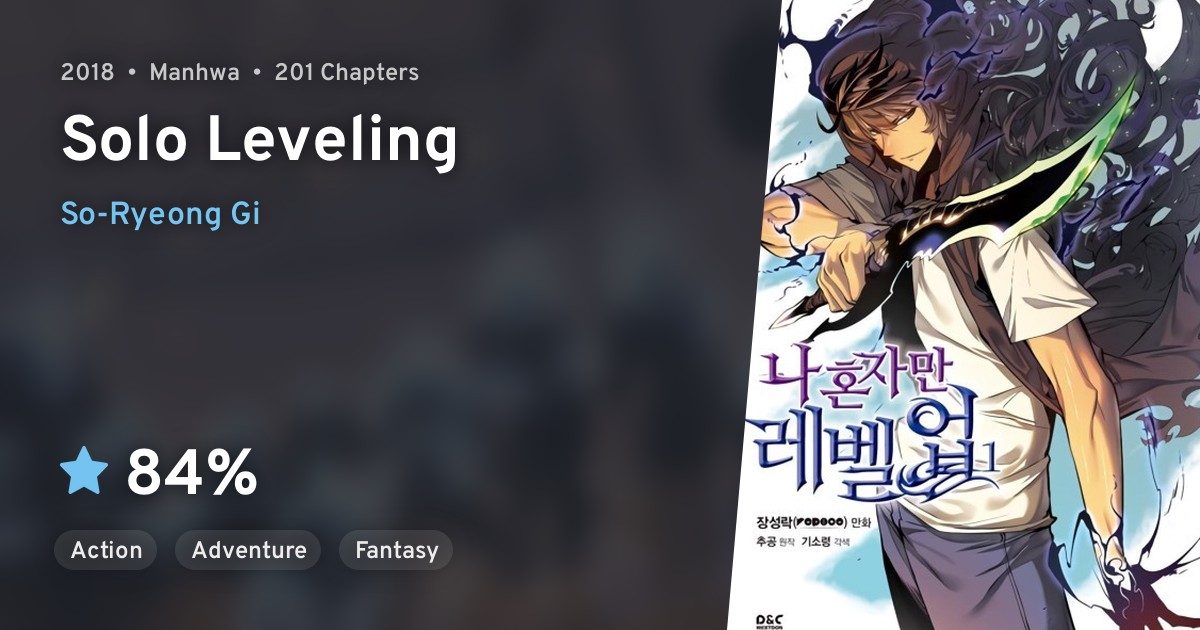
Solo Leveling wasn't drawn by one person. The chapter you burn through in four minutes leaves a room with a screenwriter, a lead artist, two background artists for the cityscapes, a colorist, a letterer and a production manager. That isn't a metaphor — it's a production line. The same is true of Omniscient Reader, Marry My Husband and every Korean webtoon being called "AAA" today.
Arabic readers memorize character names but couldn't tell you who's on the team. Three Korean studios — REDICE, YLAB and Studio LICO — make most of what you read every week. Each one runs on a different production model. This is the studio era, not the lone-artist era.
Why ask now: who really makes manhwa?
Ask a manhwa reader who wrote Solo Leveling and they'll say Chugong. Ask who drew it and they'll say DUBU. Ask who's drawing the weekly chapters today, after DUBU's death, and who's running the release schedule — silence. That silence is the natural result of an industry that has quietly redefined what it means to be the "maker" of a work.
Before 2018, webtoons were made the old way: one artist, two assistants. Today every AAA project ships out of a studio with dozens of staff and dedicated departments for each stage of production. The structural reason is simple. Korean author Yoon Taeho (of Misaeng) has said publicly that shipping 80 panels a week is impossible for a solo artist, and that he personally needs at least six technical assistants as a baseline.
One distinction to keep with you: the publisher is not the studio. KakaoPage, Naver and D&C Media are publishers — they distribute and own the display platform. REDICE, YLAB and LICO are studios — they draw. Confuse the two and you'll find yourself saying "Solo Leveling is a Kakao title." It isn't. Solo Leveling is a REDICE title that Kakao publishes.
REDICE Studio — the team that drew Solo Leveling
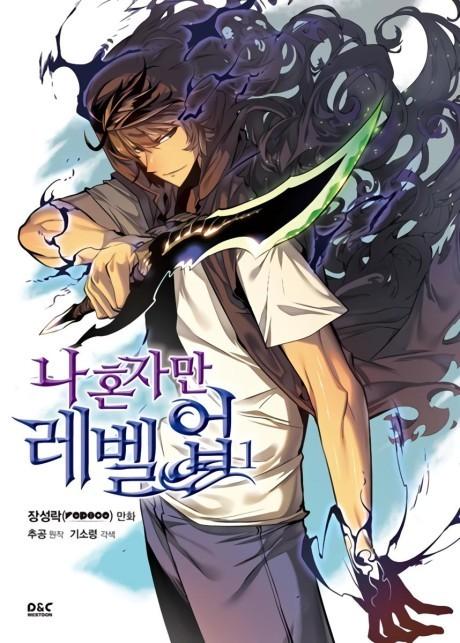
Founded by DUBU, July 2018
REDICE was founded by Korean artist Jang Sung-rak — known by his pen name DUBU — in July 2018 in Seoul, built specifically to draw Solo Leveling for KakaoPage. The studio wasn't an idea before the project; it was a vessel designed around a single work, and then it grew into a production engine serving 45 published titles by 2026.
The catalog: from Solo Leveling to Tomb Raider King
The titles carrying REDICE's signature: Solo Leveling (2018), Omniscient Reader's Viewpoint (2020, executed by the Sleepy-C team at Studio 3B2S under REDICE supervision), Tomb Raider King, Overgeared, Nano Machine and Return of the Disaster-Class Hero. Notice the pattern: all adapted from web novels, all in the action-fantasy lane. That is the studio's visual signature — wide shots, 3D lighting, camera motion that owes more to anime than to comics. For a quick scan of what REDICE is making right now, browse the 5 biggest manhwa of 2026 — more than half the list carries their fingerprint.
After DUBU: the studio goes to Hollywood
On July 23, 2022, Jang Sung-rak died at 37 from a brain hemorrhage. The studio could have stopped there. It didn't. A new art team took over Solo Leveling: Ragnarok and the side stories, holding to the original visual signature. That is exactly what the studio model does: the founder leaves, the machine keeps running. After Sony announced that the Solo Leveling anime was the most-watched series in Crunchyroll's history, REDICE moved into international live-action production deals across 2024–2025 — a leap from Korean webtoon to global live-action content in seven years.
YLAB (와이랩) — the architect of webtoon's "shared universe"
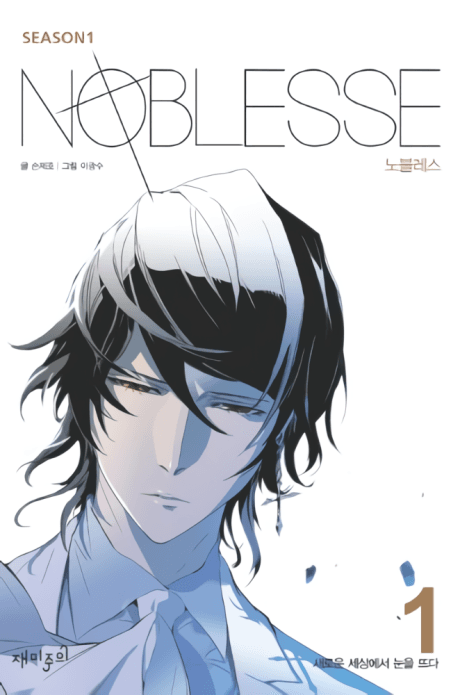
Youn In-wan and the 2010 founding
YLAB was founded in 2010 by Korean screenwriter and producer Youn In-wan in Seoul's Mapo-gu district. As of April 2023 the company employed 115 staff, and in January 2023 it filed a preliminary application to list on Korea's Kosdaq exchange. Those numbers put YLAB in a different category from REDICE. This isn't a studio that grew up around a single work; it's a content company that was planned that way from day one, waiting for the IPO bell to ring.
Super String Universe: what if webtoons had a Marvel-style shared universe?
On December 14, 2015, YLAB formally announced "Super String Universe" — the first Marvel-style shared universe in Korean webtoons, weaving nine titles into a single narrative world. Youn In-wan took the idea from The Avengers (2012) and went on to set up a Japanese subsidiary to push it abroad. The concept was alien to the industry before YLAB put it on the table. Today other studios are trying to copy it.
The IP model: why YLAB owns its work
Among its standout titles: Island (with illustrator Yang Kyung-il), and by some accounts also Hellper (artist SAKK) and The Boxer (artist JH), under an umbrella model that houses multiple teams. Youn In-wan personally co-wrote major Japanese manga such as Defense Devil and Blade of the Phantom Master. But what really sets YLAB apart structurally is something else: it keeps the IP rights to its work rather than ceding them to the platform. That is the real reason its IPO pitch is serious. Investors aren't buying distribution rights; they're buying full ownership of a catalog ready for anime, drama and games. For broader context on how these rights turn into international revenue, read how Crunchyroll's growth masks structural problems after Solo Leveling.
Studio LICO — the quiet giant behind Marry My Husband
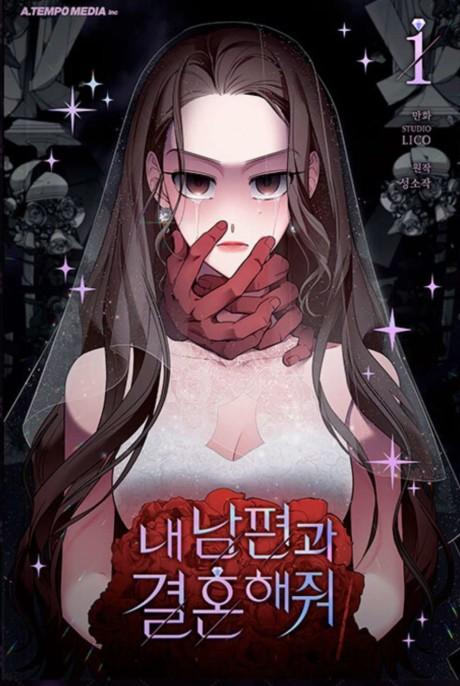
Naver Webtoon and the 2017 launch of LICO
Its full name is Life with Content, shortened to LICO. It was founded by Naver Webtoon in July 2017 as a subsidiary for multi-format digital content production: webtoons, animation, games and video — all under the umbrella of WEBTOON Entertainment, the Nasdaq-listed parent. In other words, unlike REDICE (independent) and YLAB (waiting for its listing), LICO has always operated under the roof of a content giant.
The romance catalog: Marry My Husband, Save Me, Lovers of the Red Sky
The titles coming out of LICO: Marry My Husband (2022), Save Me (a 2019 collaboration with Big Hit Entertainment inside the BTS Universe), Return of the Blossoming Blade, See You in My 19th Life and Lovers of the Red Sky. Notice the very different pattern from REDICE: romantic, female-led, long-form drama instead of cinematic action. That positioning is a product of LICO sitting historically inside Naver's female-led publishing line. If REDICE is the action studio, LICO is the drama studio.
The bridge to K-drama and Netflix
Marry My Husband alone is enough to explain the LICO model: 58 chapters in the original webtoon and 10 spinoffs, becoming one of the most-read titles on WEBTOON in 2023, then a 16-episode Korean drama on tvN and Netflix between January 1 and February 20, 2024, then a Japanese live-action version in 2025. That isn't an exception in LICO's catalog — it's the rule. Almost every title they ship becomes a series. This is the "pipeline-to-K-drama" model in its purest form.
Why all three together? And how does this differ from Japanese manga studios?
The core difference: author vs studio
Japan's model has been understood for decades: the mangaka (author) is at the center, surrounded by assistants who serve the author's vision. The whole production structure exists to protect the author's time. Korea's model is structurally different: the studio is the production unit, the writer and artist are both members of a team, and the webtoon is often adapted from a web novel by a third author altogether. That is how the industrial production chain forms: web-novel author → publishing platform → studio → webtoon → anime → live-action. Four ownership layers, each with its cut.
What readers should watch for after this article
Take Sleepy-C as an example: the team that drew Omniscient Reader under REDICE supervision, won the Korean Minister of Culture's prize at the 2021 Korean Content Awards and pulled hundreds of millions of views on WEBTOON with an average rating near 9.9/10. Nobody knows their name. That is the gap between what makes manhwa and what reaches reader memory.
Three files are worth tracking through 2026 and 2027: YLAB's likely Kosdaq listing and the liquidity it would unlock for bigger projects, REDICE's expansion into international live-action after Solo Leveling, and LICO's pipeline of upcoming K-drama adaptations on Netflix. All three are at an inflection point, and all three will reshape what you read each week.
A final word
Next time you open a new chapter of Solo Leveling or Marry My Husband, read the credits with a different eye. The name on the page isn't the "artist" in the Japanese sense — it's the front of a team. And the studio behind it — REDICE, YLAB or LICO — is what decides whether you get a cinematic-grade weekly chapter or wait a month for half the quality. That is the real story behind what's been happening in the latest manhwa and industry news since 2018. Now you have the map of names.